Is Arizona still a good place to live?

Arizona Living Guide · Anthem & North Phoenix · 2026
Is Arizona Still a Good Place to Live in 2026?
An honest, local answer — not an algorithm's guess. Here's what the state actually feels like to people who live, work, and raise families here.
Quick Answer
Yes — Arizona remains one of the fastest-growing and most sought-after states in the country in 2026. It ranks No. 7 nationally for population growth, carries a 2.5% flat state income tax (one of the lowest anywhere), offers a strong and diversifying job market, and provides a lifestyle built around sunshine, outdoor access, and genuine community. The key is choosing the right part of the state — and that's exactly what this guide is here to help you think through.
Every few months, a new round of headlines asks the same question: "Is Arizona still worth it?" Some people say the heat has gotten unbearable. Others say it's too expensive now. And a few point to the summer monsoon season and traffic on the 101 as dealbreakers. Here's the truth: Arizona isn't perfect. No place is. But the people who move here — and stay — have usually thought it through honestly. This guide is written to help you do exactly that.
Is Arizona Still Growing — Or Is the Hype Finally Over?
The short answer is: it's still growing, just at a more measured pace than the pandemic-era surge. According to the U.S. Census Bureau, Arizona's population as of mid-2025 was 7,623,818 — up 67,394 from the year prior. That keeps Arizona ranked No. 7 in the country for total population growth and No. 8 for percentage growth. The state has added residents every single year since 2000 — 25 consecutive years of growth.
For perspective: in the decade between 2015 and 2025, Arizona's population grew by 13.7%. The national average over that same period was 6.2%. Arizona grew at more than double the national rate.
The biggest growth is happening exactly where you'd expect: Maricopa County — home to Phoenix, Scottsdale, Chandler, and North Phoenix — added 57,471 new residents between 2023 and 2024 alone. It's the single fastest-growing county in Arizona and consistently ranks among the fastest-growing in the entire country.
The hype hasn't ended. It has just matured. The people moving here now are doing it with open eyes — weighing the summer heat, the cost of air conditioning, and the car-dependent lifestyle against everything the state has to offer. And most of them are still saying yes.
Arizona Cost of Living: The Real Numbers
Arizona is more expensive than it was five years ago — but it's still significantly more affordable than the states most people are leaving. The overall cost of living index for Arizona sits at approximately 3–6% above the national average, driven primarily by housing. Here's what the actual numbers look like in 2026.
Housing
The statewide median home value is approximately $451,000. Average rent for a one-bedroom apartment runs around $1,250–$1,341 per month, compared to the national median of $1,639. In North Phoenix and Anthem, the median home price in 85086 sits around $575,000 — reflecting the community's premium amenities, school district, and master-planned quality of life.
For buyers relocating from Los Angeles, the San Francisco Bay Area, Seattle, Denver, or Chicago, those numbers still represent a meaningful value gap — especially when you factor in what you get: square footage, a private yard, community amenities, and no state income tax on retirement income.
Taxes — Arizona's Real Advantage
This is where Arizona separates itself from almost every other fast-growing Sun Belt state. Arizona has:
- 2.5% flat state income tax — one of the lowest in the nation (California tops out at 13.3%)
- No Social Security income tax at the state level
- No estate or inheritance tax
- Low property taxes — averaging 0.44–0.63% of assessed value, well below the national average
- No city or county income taxes layered on top of state taxes
For retirees and high-income earners in particular, the cumulative tax advantage of living in Arizona versus California, New York, or Illinois is substantial — often tens of thousands of dollars per year.
The Hidden Cost: Summer Electricity
Outside of summer cooling, utilities are close to or slightly above the national average. Grocery costs run roughly 1–3% above national averages. Healthcare costs depend heavily on what part of the metro you live in and your proximity to major hospital networks — North Phoenix has excellent access.
The Arizona Lifestyle — What It Actually Feels Like
Numbers tell part of the story. But lifestyle is the reason people either fall in love with Arizona or quietly move back to wherever they came from within two years. Here's the honest version.
The Outdoors Are Genuinely World-Class
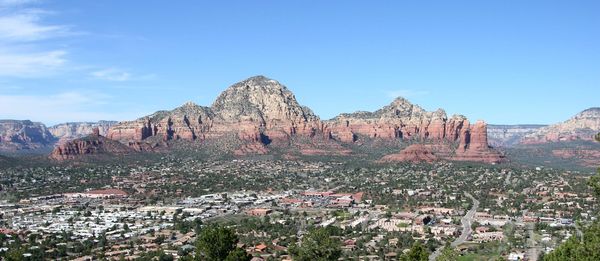
Arizona has more than 300 days of sunshine per year. That's not a marketing slogan — it's meteorologically accurate. And what you do with that sunshine is entirely up to you. Residents in North Phoenix and Anthem have immediate access to hiking trails in the Daisy Mountain foothills, with longer day trips reaching Sedona (1.5 hours), the Grand Canyon (2.5 hours), Flagstaff's pine forests and skiing (2 hours), and Lake Pleasant for boating and paddleboarding (25 minutes). Golf is year-round. Pickleball, cycling, and trail running communities are active and welcoming.
The Heat Is Real — But It's Manageable (Especially in North Phoenix)
Let's be direct: Phoenix summers are hot. Between late June and mid-September, temperatures in the lower valley regularly exceed 110°F. Central Phoenix, Tempe, Chandler, and Mesa bear the full brunt of this. However, North Phoenix and Anthem sit at higher elevations — typically 1,400 to 2,000 feet — which translates to temperatures that routinely run 5–10°F cooler than central Phoenix during peak summer. Monsoon season (July–September) brings dramatic afternoon storms that offer temporary relief, a spectacular show, and the reason desert landscaping smells the way it does after rain.
Most long-term Arizona residents describe the heat adjustment as a genuine lifestyle recalibration: early morning outdoor activities, midday indoor time, evening events on patios. It's not denial — it's adaptation. And most people who stay past their first summer say the trade-off is worth it the moment October arrives.
You Need a Car
Arizona is a car state. Public transit outside of the downtown Phoenix light rail corridor is limited, and most communities — including Anthem — are designed around personal vehicle use. If you're relocating from New York City or Chicago and expecting to live car-free, this will require adjustment.
The Community Side of Arizona
This is something that rarely shows up in cost-of-living articles but matters enormously in day-to-day life. Arizona — and especially master-planned communities like Anthem — tends to foster genuine neighborhood connection. HOA-organized events, sports leagues, community parks, school involvement, and organized activities create the kind of neighbor-knowing-neighbor environment that larger cities have often lost. It's one of the most consistent things people say after moving to Anthem: "I didn't expect to know so many of my neighbors this quickly."
Why People Are Still Moving to Arizona
When you look at who is moving to Arizona right now, a clear picture emerges. It's not random migration — it's driven by a few specific forces that aren't going away anytime soon.
- Tech sector expansion. TSMC's $165 billion semiconductor campus in North Phoenix is the largest foreign direct investment in U.S. history. It's creating tens of thousands of high-wage engineering and technical jobs and drawing a wave of tech-sector employees and their families — many of whom are landing in Anthem, Norterra, and Union Park.
- Leaving high-tax states. California, New York, and Illinois continue to export residents to Arizona. The combination of Arizona's 2.5% flat tax versus California's 13.3% top rate is a financial argument that requires very little explanation.
- Remote work flexibility. The shift to hybrid and remote work has freed up millions of professionals to choose where they live based on quality of life rather than office proximity. Arizona's outdoor lifestyle, housing size per dollar, and community infrastructure are ideal for this demographic.
- Retirement relocation. Arizona has been a top retirement destination for decades, and the combination of no Social Security tax, warm winters, healthcare infrastructure, and active adult communities keeps that trend strong. Anthem Country Club's 55+ community is one of the most sought-after retirement options in the state.
- Families seeking top schools. The Deer Valley Unified School District — which serves Anthem — consistently ranks among the top public school districts in Arizona, drawing families who prioritize education quality alongside lifestyle amenities.
Honest Pros & Cons of Living in Arizona
Every place has trade-offs. Here's the unfiltered version — the same conversation I'd have with anyone sitting across the table from me thinking about this move.
What Arizona Gets Right
- 300+ days of sunshine annually
- 2.5% flat state income tax — one of the lowest in the nation
- No Social Security, estate, or inheritance tax
- Low property tax rates (avg. 0.44–0.63%)
- World-class outdoor recreation year-round
- Strong and diversifying job market
- Mild, beautiful winters (Oct–April)
- More housing per dollar than coastal metros
- Top-rated master-planned communities
- Strong retirement infrastructure
- Diverse landscapes — desert, mountains, forests
- Genuine community culture in suburban areas
What to Think Through Honestly
- Extreme summer heat (110°F+ in central Phoenix)
- Summer electricity bills: $300–$600/month
- Car dependency — limited public transit
- Water supply concerns in a desert state
- Haboobs (dust storms) during monsoon season
- Scorpions, rattlesnakes, and other desert wildlife
- Limited seasonal variation (no traditional "fall")
- Healthcare access more limited in rural areas
- Traffic congestion growing in suburban corridors
- Political landscape leans conservative
Why North Phoenix Stands Out Among Arizona's Options
Arizona is a big state with a wide range of living environments — from downtown Scottsdale's urban energy to Flagstaff's mountain college-town vibe to the agricultural quiet of the East Valley. So why does North Phoenix keep rising to the top for families, remote workers, and relocation buyers?
Location Sweet Spot
North Phoenix sits approximately 20–35 miles from downtown Phoenix, Sky Harbor Airport, and Scottsdale — close enough for access to the metro's world-class dining, sports, and cultural amenities, far enough to escape the density, traffic, and heat intensity of the valley floor. The I-17 corridor connects North Phoenix to central Phoenix in 30–45 minutes under normal conditions.
The TSMC Factor
The proximity to TSMC's semiconductor campus is a genuine economic driver — not just hype. The facility is already operational and expanding, drawing thousands of engineers, project managers, and supply-chain professionals who need housing within reasonable commute distance. North Phoenix and Anthem are the natural landing zones for this workforce, which creates sustained demand for well-located homes in the corridor.
Infrastructure Investment
Road infrastructure, water systems, school capacity, and commercial development in North Phoenix are all being built for the next decade — not patched together from what existed before. This is a community being deliberately invested in, which typically correlates with long-term property value stability.
Why Anthem, AZ Is in a Category of Its Own
Anthem is the kind of community that's easier to understand once you've spent a weekend here than it is to explain from a description. But let me try anyway.
Built as a master-planned community beginning in the late 1990s, Anthem covers nearly 10 square miles at the base of Daisy Mountain — about 32 miles north of downtown Phoenix. It's home to over 10,000 households across six neighborhoods, including the family-oriented Anthem Parkside and the guard-gated, golf-centered Anthem Country Club.
Top-Rated Schools
Boulder Creek High School, Diamond Canyon Elementary, Gavilan Peak Elementary — all Deer Valley Unified. BASIS Anthem charter school nearby.
65-Acre Community Park
Big Splash Water Park, Olympic pool, catch-and-release fishing ponds, skate park, soccer fields, rock-climbing wall, and miles of trails.
Country Club Living
Two 18-hole golf courses, guard-gated, private clubhouse and restaurant, all single-story homes — and automatic social membership with every home.
Cooler Microclimate
Elevation of 1,400–2,000 ft means summer highs typically run 5–10°F cooler than central Phoenix and the valley floor.
Walkable Retail
Outlets at Anthem, grocery stores, local restaurants, medical offices, and services all within the community footprint.
Easy Access
I-17 on-ramp within minutes. Downtown Phoenix ~35 minutes. Sky Harbor Airport ~40 minutes. TSMC campus ~15 minutes.
What Anthem has built over 25+ years is something that takes generations to develop organically elsewhere: a genuine neighborhood culture. People who move here tend to stay. The community events calendar is consistently active, neighbors know each other, and the combination of amenities, schools, and lifestyle keeps demand stable even through market fluctuations.
Who Is Anthem Right For?
Families
Top schools, community parks, sports leagues, water park, safe walkable streets, and an active neighborhood culture. Anthem consistently ranks as one of Arizona's best family communities.
Retirees
Anthem Country Club's single-story, guard-gated golf community is purpose-built for active adult living. Social membership is automatic. The tax advantages of Arizona retirement income make the math compelling.
Relocation Buyers
TSMC-driven relocation, remote workers, and corporate transferees consistently land in Anthem for its combination of lifestyle infrastructure and I-17 commute access to the North Gateway employment corridor.
Move-Up Sellers
Anthem's 85086 market in 2026 offers buyers strong leverage with elevated inventory and prices down from 2022 peaks — an opportunity window for move-up buyers from other Phoenix zip codes.
More Anthem & North Phoenix Guides
Frequently Asked Questions About Living in Arizona
Is Arizona still a good place to live in 2026?
Yes. Arizona ranks No. 7 nationally for population growth, with 67,000+ new residents in the past year alone. The 2.5% flat income tax, no Social Security tax, 300+ days of sunshine, a booming tech economy, and master-planned communities like Anthem continue to draw people from across the country. The key is honest assessment of the summer heat and choosing the right community for your lifestyle.
How does Arizona's cost of living compare to California or Colorado?
Arizona's overall cost of living is roughly 3–6% above the national average, compared to California which runs 40–50% above average and Colorado roughly 15–20% above. Arizona's 2.5% flat income tax vs. California's top rate of 13.3% makes a particularly large difference for mid-to-high income earners and retirees. Housing in North Phoenix and Anthem is significantly more spacious and more affordable per square foot than comparable markets in Denver, Los Angeles, or the Bay Area.
Why are people still moving to Arizona despite the heat?
Because for most people, the trade-off math works out in Arizona's favor. Mild, beautiful winters from October through May. Outdoor recreation that's accessible most of the year. A flat 2.5% income tax. No tax on Social Security income. Strong schools. Safe, well-managed communities. And a job market that's growing fast — especially in tech and healthcare. The summer heat is real and intense, but it's also predictable, manageable with air conditioning, and confined to roughly 90 days of the year.
What is the best area to live in Arizona for families?
For families prioritizing schools, safety, community, and lifestyle, North Phoenix communities consistently rank among the best in the state. Anthem 85086 is particularly strong — it's served by the Deer Valley Unified School District (including Boulder Creek High School, Diamond Canyon Elementary, and Gavilan Peak Elementary), has a 65-acre community park, youth sports leagues, and a genuinely tight-knit neighborhood culture.
Is Anthem Arizona good for retirees?
Anthem Country Club is one of Arizona's most popular active adult communities. It's guard-gated, built around two 18-hole golf courses, features all single-story homes, and includes automatic social club membership. Arizona doesn't tax Social Security income and has no estate or inheritance tax, making it financially advantageous for retirement. The community hosts extensive social events, fitness programming, and has immediate access to Anthem's full amenity package.
What should I know before moving to Arizona that most articles don't mention?
A few things come up consistently: (1) Summer electricity bills shock newcomers — budget $300–$600/month for a larger home. (2) Older homes are significantly less energy-efficient than new construction — ask about insulation and HVAC age before buying. (3) Car insurance and registration costs tend to be lower than in other states, which partially offsets car dependency costs. (4) The social scene in well-run HOA communities like Anthem is far more active and inclusive than most people expect — it's not just rules and fees. (5) October through May in Arizona is genuinely one of the best climates in the United States.
From Someone Who Actually Lives Here
Before You Make a Move Based on Internet Opinions — Let's Actually Talk
I can tell you what the grocery store feels like in August. What your electricity bill will look like. Which streets in Anthem have the best mountain views. Which floor plans hold value and which ones don't. The stuff you only find out after you've been here a while — I already know it. Let's talk through what Arizona actually feels like day-to-day before you make one of the biggest decisions of your life based on a listicle.
ryanknowsre@gmail.com · Ryanhasthedeals.com
Have questions about living in Anthem, North Phoenix, or moving to Arizona? I'm happy to be a local resource — no pressure, no pitch.